
Last updated: 21 October 2026, 12:45 AM PKT. Incident details verified against official statements from the Prime Minister of Australia and multiple wire reports.
Quick answer: Australian parliamentarian Helen Haines is critically injured after being struck by a vehicle outside her office in Wangaratta, Victoria, in what police are treating as an apparently deliberate attack. Prime Minister Anthony Albanese said the circumstances indicate the collision was not accidental, and a local barber who ran to the lawmaker’s rescue is being hailed as a hero.
Democracies measure their health by many things, but few measures are as raw as this one, whether a citizen can serve in public office without being physically harmed for it. Australia woke to that question this week after one of its most respected independent politicians was struck down outside her own electorate office, in a country town better known for its heritage streets than for headlines.
This report covers what happened, what is known about the investigation, the ordinary man whose reflexes may have saved a life, and the uncomfortable conversation about political safety that this attack has forced in Australia and beyond.
What Happened in Wangaratta
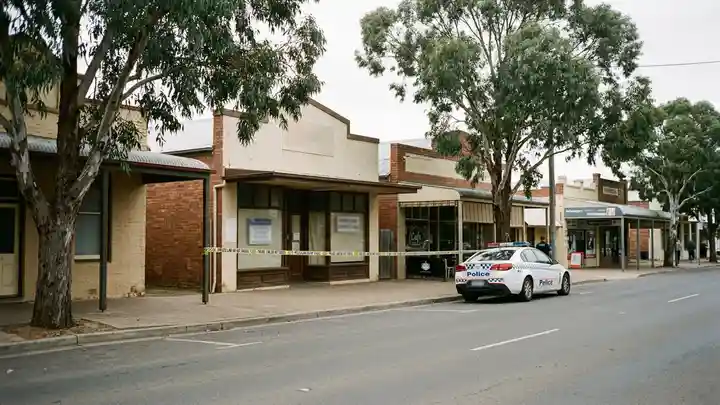
Helen Haines, the independent federal member for Indi, was struck by a vehicle outside her office in Wangaratta, a regional city in Victoria’s northeast. The injuries are serious, and officials have described her condition as critical. Victoria Police arrived quickly, secured the scene, and within hours the incident had drawn the attention of the entire national political class.
What transformed the story from a terrible accident into a national security matter was the assessment that followed. Prime Minister Anthony Albanese, briefed by authorities, said the circumstances indicate the collision was not accidental. Police are investigating the attack as apparently deliberate, which reframes everything, from the evidence they collect to the charges that may follow to the way every parliamentarian in the country now thinks about their own security.
Details about the driver and the motive remain under investigation, and responsible coverage means resisting the flood of speculation that follows any such incident. What can be said is that investigators are treating the case with the seriousness that a targeted attack on a sitting lawmaker demands.
The incident at a glance
Victim: Helen Haines, independent MP for Indi
Location: outside her electorate office, Wangaratta, Victoria
Condition: critical
Official assessment: collision appears deliberate
Investigation: Victoria Police, national attention
The Barber Who Ran Toward Danger
Amid the grim details, one image has captured Australia’s heart. A local barber, working near the scene, saw the aftermath unfold and ran toward the injured lawmaker, applying help until emergency services arrived. He is being hailed across the country as a hero, and the tribute has a quality Australians especially cherish, that in the worst moment, an ordinary working man did the extraordinary thing without calculating.
There is something fitting about who ran to help. Haines herself came to politics from exactly that world, as a nurse, a midwife, and a farmer’s wife who spent decades in community health before entering parliament. Her political identity was built on the idea that ordinary people’s experience belongs in the national conversation. On the day she was attacked, her community answered with the same ordinary courage her career has honoured.
Stories like this matter beyond sentiment. They shape how communities process trauma, and in this case they have given Australians a way to rally around the victim that is about solidarity rather than fear, which is precisely what such moments require.
Who Is Helen Haines and Why This Shocks Australia
To understand why this attack has landed so hard, you need to understand who Helen Haines is in Australian politics. She entered parliament in 2019, winning the seat of Indi as an independent, a seat her community had already shown its independence by winning once before. She built her reputation as a relentless advocate for integrity in politics, pushing anti corruption legislation and accountability reforms with a seriousness that earned respect across party lines.
In a parliament dominated by two big parties, Haines became a symbol of the independent movement that has reshaped Australian politics in recent years, the idea that communities can elect a local voice unbound by party discipline. Her politics were emphatically civil. She was known for arguing without insulting, for evidence over slogans, and for treating opponents as colleagues. If there was ever a politician associated with gentleness in public debate, it was her, which is what makes a deliberate attack feel like a violation of something beyond one person.
The shock is also generational. Australians of a certain age struggle to recall a comparable attack on a federal lawmaker in their lifetime. Political violence had been, until recently, something that happened in other countries, discussed with the safe distance of a stable democracy.
Political Safety: The Conversation Every Democracy Is Having
The attack lands in a world that has been having this conversation too often. Across democracies, the past years have seen politicians assaulted, threatened, and in the worst cases killed, and the pattern behind the headlines is consistent, rising polarisation, online radicalisation that launders rage into action, and public figures who monetise contempt until someone takes it literally.
Australia’s own politics had felt relatively insulated from the worst of this, and that insulation was part of the country’s self image. The reality politicians describe privately is different, growing volumes of threats, abuse aimed at women in public life at rates men rarely face, and electorate offices that have become fortresses of glass and locks. Haines herself had spoken before about the pressures public life puts on families and on civility.
The practical response now underway will be familiar to anyone who follows this field, security reviews for members of parliament, reassessments of electorate office locations and protections, and fresh debate about whether Australia’s famously accessible politicians can remain accessible. There is a real tension at the heart of that debate. The thing that makes politicians like Haines valuable, proximity to their communities, is exactly what makes them vulnerable, and every security measure that pushes representatives behind barriers also pushes democracy further from the people it serves.
What Investigators Will Look At
Deliberate vehicle attacks leave trails, and Victorian investigators will work several threads. The driver’s history, online activity, and recent communications. Witness accounts from the busy street, and the growing evidence source of every modern case, camera footage from shops, dashcams and phones. The vehicle itself, its ownership, movements, and any planning traces.
Motive will be the question everyone wants answered first and the one investigators answer last, because rushing it risks getting it wrong and feeding exactly the polarisation that breeds such attacks. Authorities have been careful so far, confirming the deliberateness of the act while declining to speculate publicly about ideology or grievance until the evidence speaks.
What happens at charging will matter nationally. If this is prosecuted as a terrorist act or as an attempted murder with political motive, the sentences and the security policy responses differ, and the country’s answer to the attack will be read by every unstable person watching, which is why the process now underway is about more than one case.
Why This Story Reaches Pakistan
Pakistani readers follow stories of political violence with a bitter familiarity, having lived through decades when assassination attempts shadowed public life. There is a lesson in the Australian reaction worth naming. The country’s entire political class, its media, and its prime minister treated one attack on one independent lawmaker as a national emergency of values, not a statistic. That instinct, that the safety of political opponents is sacred, is the immune system of a democracy, and its strength matters more than the attack that tested it.
For the Pakistani diaspora in Australia, one of the most successful migrant communities in the country, the incident changes little practically, life in Wangaratta and Melbourne continues, and the investigation is proceeding under stable institutions. But it is a moment that diaspora communities everywhere recognise, watching the adopted country process the kind of shock the homeland knows too well, and hoping the recovery preserves what made the adopted country worth choosing.
We will update this page as Helen Haines’ condition and the investigation develop. The Prime Minister’s office remains the authoritative source for official statements, and we link it below.
The Security Reality Around Australia’s Politicians
Australia’s federal politicians operate with lighter protection than their American or British counterparts, and that lightness has been a point of national pride, senators flying domestically like any passenger, ministers walking into buildings past members of the public. The threats behind the scenes, though, have been multiplying for years. Members of parliament routinely describe abuse that would end careers in other workplaces, and staff who answer electorate office phones carry stories most voters never hear.
Reviews after past incidents in other countries have repeatedly warned that open access and safety trade against each other, and each warning was softened by distance, the violence always somewhere else. This week that distance closed to zero. Security agencies will now reassess electorate offices, home addresses, travel patterns, and the protocols for public meetings, and the debate will arrive at every parliamentarian’s door, literally, because the model of the corner office with an open door is exactly what a deliberate vehicle attack turns into a liability.
Whatever changes come, their shape will define Australian political culture for a generation, and the country will be choosing, in effect, how much of its openness it is willing to trade for safety.
What Happens to Indi’s Seat While Its Member Fights to Recover
Constitutional questions rarely wait politely, and communities whose representative is hospitalised face them quickly. Under Australian practice, a member who is unable to attend for extended periods remains the member, the seat does not fall vacant, and the electorate’s staff and procedure carry the casework. Haines’ office in Wangaratta continues to serve constituents, and the federal house will proceed with her seat held, her vote exercised per standing arrangements, and her recovery treated as the only timeline that matters.
The community response has been the story within the story, flowers at the office, messages from every corner of the political spectrum, and a town that knows its member personally holding its breath together. Indi has a tradition of doing politics differently, with community canvassing and independent voices, and the coming weeks will test whether that tradition’s openness can survive an attack aimed at it.
If one image endures from this week, it should be the one Australia itself has chosen, not the mangled metal on a Wangaratta street, but a barber with clippers still in his pocket, running toward the trouble because that is what neighbours do.
Frequently Asked Questions
The Incident
What happened to Australian MP Helen Haines?
She was critically injured after being struck by a vehicle outside her electorate office in Wangaratta, Victoria. Prime Minister Albanese said the circumstances indicate the collision was not accidental, and police are investigating it as an apparently deliberate attack.
Who is Helen Haines?
She is the independent federal member for Indi, a former nurse and midwife first elected in 2019, known nationally for her advocacy of political integrity legislation and the independent movement in Australian politics.
Who helped the injured MP?
A local barber who was working near the scene ran to her aid and provided help until emergency services arrived. He is being hailed across Australia as a hero.
The Aftermath
Has a motive been established?
No public motive has been confirmed. Police have not named a suspect’s ideology or grievance, and investigators will establish the driver’s history, movements and online activity before drawing conclusions.
How has Australia responded?
With national shock and solidarity. The attack has prompted security reviews for federal lawmakers and a renewed debate about threats against politicians, especially women in public life.
Will the attack change how Australian MPs work?
Security around electorate offices will be reassessed, but the tension is real, accessibility is central to the community politician model Haines represents, and any security response must balance protection with the openness of public life.


