
Last updated: 23 October 2026, 6:45 PM PKT. Result verified against official Games reports and the athlete’s quotes from Nagoya.
Quick answer:Haider Ali has won silver for Pakistan in the men’s discus throw F37 at the Asian Para Games in Nagoya, Japan. His best throw measured 57.20 metres. Uzbekistan’s Kudratillokhon Marufkhujaev took gold with an Asian Para Games record of 57.39 metres, just 19 centimetres ahead. India’s Haney claimed bronze at 57.04 metres. It is Pakistan’s first medal of these Games.
Nineteen centimetres. That is the distance between Haider Ali and a gold medal that would have written an even bigger headline. Instead the 41 year old from Gujranwala settles for silver at the Asian Para Games, Pakistan’s first podium of the Nagoya edition. the story of how he got there says everything about grit in Pakistani sport. Here is the full picture from the field in Nagoya.
The Final, Throw by Throw
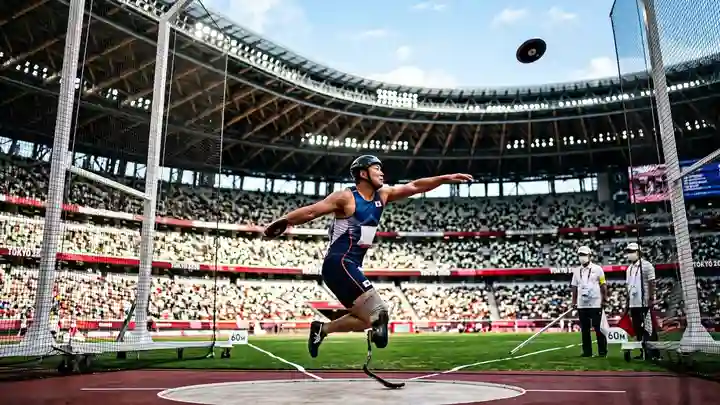
The F37 discus final was a tight, tense, three way fight from the opening rounds. Marufkhujaev of Uzbekistan set the tone early with a massive throw of 57.39 metres, a mark that broke the Asian Para Games record. immediately turned the competition into a chase. Haider Ali answered with his best effort of the day at 57.20 metres, a personal best by his own account of the contest’s margins.
India’s Haney pushed hard through the final rounds and landed at 57.04 metres, also a personal best, to take bronze. The gaps tell the story of the evening. Nineteen centimetres separated gold from silver. Sixteen more centimetres separated silver from bronze. Three men, all at their peak efforts, separated by barely a arm’s length of dirt in a stadium in Nagoya.
After the final, Haider kept his words simple. He said he had trained for one year because this was a big event. That single sentence carries the whole biography of a Para athlete who has spent two decades making Pakistan’s flag matter at events most of the country never watches.
Who Is Haider Ali?
For a generation of Pakistani sports fans, Haider Ali is already a name written in history. He won Pakistan’s first ever Paralympic gold medal at the Tokyo Games, a moment that remains the single greatest achievement in the country’s Para sports story. Born in Gujranwala, he has competed across the world in cerebral palsy classification events. at 41 he is now the senior statesman of Pakistan’s Para athletics squad.
The silver in Nagoya matters because of what it proves. Four years after his Tokyo triumph, against opponents twenty years younger, he produced the longest series of throws of his recent career when it counted. Funding for Para sport in Pakistan remains thin, facilities thinner. every medal Haider wins arrives despite the system rather than because of it.
Pakistan at the Asian Para Games
Pakistan sent a small contingent of nine athletes to the Aichi-Nagoya Games, which run from 18 to 24 October. The squad competes across Para athletics, Para table tennis, Para powerlifting and wheelchair tennis. Haider Ali led the athletics group alongside Khadija Imran, Nabeel Iqbal and Muhammad Nadeem in sprint, shot put and high jump classifications, with Zain Ali, Abdullah Jan and Tajmeena Bibi in table tennis, Nasir Butt in powerlifting. Asif Abbasi in wheelchair tennis.
With Haider’s silver on the board, the medal count stands at one. the remaining days offer chances in the table tennis classes and the powerlifting platform. Even by the modest standards of Pakistan’s continental Games campaigns, the team’s presence across four sports is worth noting. each event now carries the momentum of the first medal.
The Bigger Picture: Pakistan’s Year in Multi Sport Events
The Para Games silver lands in a season when Pakistani athletes have genuinely overperformed on the continental stage. At the Asian Games earlier this month, Pakistan finished with ten medals, two silver. eight bronze, their best haul since the 2002 Busan Games. That tally included silver in men’s cricket and men’s team squash. bronzes across hockey, volleyball, shooting, MMA, women’s cricket and even e-sports.
Cricket’s own calendar never stops either. While Haider threw in Nagoya, the national ODI side sits unbeaten at the top of the home tri-series, as we covered in our report on thetri-series points table and Pakistan’s unbeaten run. The veterans’ game is making news too, through thePCB Over-50 Masters World Cupcampaign across the border. Pakistani sport, starved of investment, keeps producing moments anyway.
What the Silver Means Going Forward
Medals buy attention, and attention is the currency Para athletes in Pakistan never collect reliably. Haider’s podium finish should translate into the basics, recognition from the sports board, support for the next training cycle. coverage that treats Para sport as sport rather than charity. The 2028 Paralympic cycle starts now. at 41, Haider is proof that the window never quite closes for those who keep throwing.
His own framing after the final was about the one year of training behind the throw. Multiply that discipline across a national programme and the medal tables look different. Until the system changes, Pakistan will keep depending on individuals like him, and individuals like him will keep delivering anyway.
Team Pakistan’s continental representation runs under thePakistan Olympic Association, which coordinates the national participation at the Asian and Para Asian Games. We will update this report if further medals land before the Games close.
The F37 Classification, Explained Simply
Para sport groups athletes by how their impairment affects performance, not by diagnosis alone. The F37 class covers athletes with cerebral palsy or similar coordination impairments on one side of the body, in the moderately affected band. Throwing classes run from F31, the most affected, upward, and F37 athletes compete with usable function in their throwing limb.
That fine print shapes the contest. F37 discus is a battle of balance, grip and timing, because the body fights itself through every rotation. Champions in this class are technicians first. Haider’s throwing style, built over two decades, minimises wasted motion and lands the discus flat. The centimetre margins in Nagoya are exactly the margins this class produces.
For readers new to Para athletics, the takeaway is simple. A silver at 57.20 metres in this class is not a participation award. It is a podium finish against specialists who train for this one event for years, on a stage where a bad release costs a medal.
Pakistan’s Para Sport System: The Hard Reality
The medal also spotlighted the machinery behind it, or the lack of one. Pakistan’s Para athletes train with minimal institutional support. Coaches volunteer or self fund. Equipment arrives through donations. Travel to qualifiers depends on sponsor letters written days before flights. The National Paralympic Committee does remarkable work with budgets that would not cover one season of a professional franchise’s catering.
Haider’s career is the proof of both failure and promise. Two decades ago he was a teenager throwing in Gujranwala with no programme to join. The system never built him, so he built himself, and Tokyo’s gold followed. Every Pakistani medal in Para sport since has followed the same biography. One determined athlete, one improvised support circle, one result that shames the budget meetings.
Nagoya’s silver lands as the Games close their final days. The delegation flies home to the familiar cycle, interviews, congratulations, silence, and then another qualifying cycle with the same empty calendar of support. Breaking that cycle is a policy choice, and Pakistan’s Para athletes have done their part of the bargain for twenty years.
Inside the 57.20 Metre Throw
Fifty seven metres does not sound far until you picture the field. The discus left Haider’s hand at the ideal launch angle for his class, rode a flat trajectory downwind, and landed centimetres inside the sector’s sweet zone. Six throws, and that one attempt carried him to the podium. Finals are decided by the best single effort, which is why Para throwing rewards composure as much as strength.
The competition sequence told the story. Marufkhujaev’s record throw landed early and sat on the leaderboard all evening. Haider answered in the middle rounds, and his best came late enough to add pressure but early enough for his rivals to respond. Neither could. The bronze medalist pushed closest, and the last round saw two throws land within a metre of the medals’ line.
Nineteen centimetres separated the champion from the runner up. In sprint terms that is a stride. In throwing terms it is a fraction of a release angle. Haider walked away knowing one centimetre of timing separated the colours, and that knowledge cuts both ways. It stings tonight. It also maps exactly what a winter of training must fix for the next final, and champions are built on precisely that kind of arithmetic.
The Medal Table and the Road to 2028
Context for the tally, because silver alone reads small. Host Japan and regional giants China, Iran and Uzbekistan dominate these Games with delegations in the hundreds. Pakistan’s nine athletes compete against systems spending thousands of times more, and every Pakistani medal arrives against that arithmetic. One silver at Nagoya sits proudly beside the ten medal Asian Games haul from the main Games earlier this month.
The Los Angeles 2028 Paralympics are the horizon now. Qualification windows open through 2027, and Haider’s personal best trajectory shows he is still improving at 41. Discus careers stretch longer than sprint ones, and the F37 world lead sits within one good afternoon of his Nagoya mark. The next World Championships become his springboard.
The delegation returns to Islamabad this week with its medal, its stories and its case for investment renewed. That case now carries a podium photograph, which in funding meetings is worth a thousand reports. Para sport’s economics are simple. Podium finishes attract funding, funding builds champions, and Pakistan has decades of catching up to do. Silver in Nagoya is one more argument in a case the athletes keep winning while the system keeps adjourning.
The Delegation’s Other Stories From Nagoya
The silver anchored Pakistan’s campaign, but the smaller stories deserve their ink. Khadija Imran’s first appearance at a continental Games gave Pakistan a woman on the athletics team, a milestone the contingent celebrated as loudly as any throw. The table tennis squad gained match experience against Asian class opponents that no domestic tournament can replicate. Nasir Butt lifted in one of powerlifting’s deepest fields.
These results do not reach medal tables, but they build the pipeline. Every first appearance teaches travel routines, warm up discipline and competition pacing that a nine athlete delegation can pass down. Pakistan’s Paralympic history started exactly this way, with small teams collecting experience before Haider’s generation collected gold.
The Games close on 24 October, and the delegation’s flight home lands in a country that will have moved on to the next news cycle within days. The athletes’ own calendars have not. Winter training blocks, national trials and qualification timelines are already pencilled. The work continues whether the cameras do or not, and that quiet persistence is the real story of this delegation.
Frequently Asked Questions
Silver in the men’s discus throw F37 at the Asian Para Games. His best throw was 57.20 metres, just 19 centimetres behind the record breaking gold throw of Uzbekistan’s Marufkhujaev.
He won Pakistan’s first ever Paralympic gold medal at the Tokyo Games. remains the biggest name in Pakistani Para athletics. At 41, he is still winning continental medals.
Nine athletes competing in Para athletics, Para table tennis, Para powerlifting. wheelchair tennis at the Aichi-Nagoya Games from 18 to 24 October.


