
Last updated: 22 October 2026, 12:55 PM PKT. Details confirmed through Pakistani and international reporting of the Makkah signing ceremony and follow up statements on October 21 and 22.
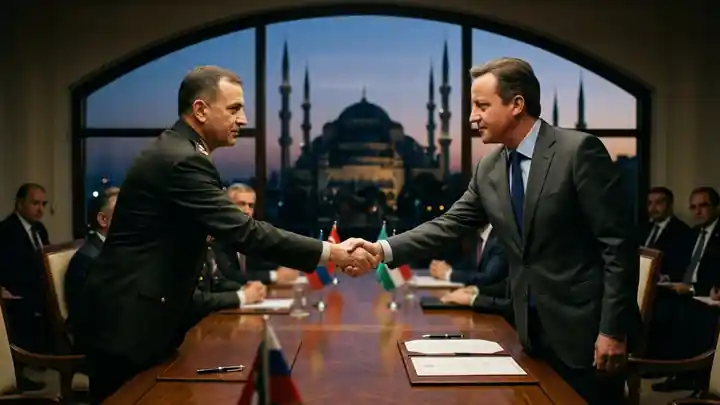
The headline: Pakistan, Saudi Arabia, Turkiye and Qatar have signed a joint defence cooperation agreement in Makkah, informally known as the Badr accord. The deal creates a ten year framework for military production, training and research, with a permanent secretariat based in Saudi Arabia and a retired Pakistani general, Nauman Mahmood, as its first secretary general. Analysts are already calling it a possible NATO style umbrella for the Middle East. Defence Minister Khawaja Asif signed for Pakistan and said the pact reflects a shared commitment to regional peace.
I have covered defence agreements before, and most of them are paper. This one feels different, for three reasons. First, the timing. The Gulf is under active drone and missile fire, the US is pulling embassy families out of Riyadh. Tankers are burning in Hormuz. Second, the members. This is not a talking shop. It binds two nuclear capable Muslim powers, Pakistan and Turkiye, to the two richest Arab guardians of the holy cities. Third, the structure. A permanent secretariat with a Pakistani general at its head means somebody actually runs this thing every day.
What was signed and where
The agreement was signed in Makkah on October 21 at a ceremony attended by Defence Minister Khawaja Asif. Islamabad has described it as a memorandum reflecting a shared commitment to peace and stability in the region. The pact has been widely labelled the Badr accord in Pakistani and international media, a name that carries deep resonance, since the Battle of Badr is the most famous alliance victory in early Islamic history.
According to details published so far, the framework runs for a decade and commits the four countries to cooperate across several practical areas. These include joint military production, shared training programmes, defence research, and coordination in responses to threats. The pact follows the bilateral security agreement Pakistan and Saudi Arabia signed in September, which already said aggression against one country would be treated as aggression against both. The Makkah signing takes that logic and widens it into a four nation bloc.
Members: Pakistan, Saudi Arabia, Turkiye, Qatar
Duration: ten years, with a permanent secretariat
Headquarters: Makkah region, Saudi Arabia
First secretary general: retired Pakistani general Nauman Mahmood
Focus: military production, training, research, threat coordination
Signed: October 21, 2026
Why now: the fires on the border of the pact
The signing did not happen in a calm neighbourhood. On the same days the ink was drying, Saudi air defence reported destroying four drones heading towards Madinah and intercepting a projectile over Najran. A drone strike on Dammam international airport killed one person and wounded eight. The United States ordered non essential embassy staff and families out of the kingdom because of the escalating Houthi campaign.
In other words, the four signatories are responding to the same threat picture. The Houthis, backed by Iran, keep proving that Saudi oil, airports and holy cities are within reach. Iran keeps warning that American bases in the region are targets. Washington keeps signalling that a post election strike on Iran is possible. Small states in between have two choices. They can wait for the storm to choose for them, or they can build a roof together. The Makkah pact is the roof.
Turkiye has already moved one step further. Reports from Ankara say President Erdogan plans to seek a parliamentary mandate to send military personnel to Saudi Arabia, which would be the first visible deployment under this new security architecture. For a region that has spent a decade trusting imported security, locally owned arrangements are a quiet revolution. Our related report on the latest Iran US war developments explains the crisis that is pushing all of this forward.
What Pakistan gets out of it
Let me be blunt about the economics, because that is where Pakistani readers rightly focus. Pakistan has fought in this region before, as loan seekers. This time the arrangement comes with money and industry attached. Saudi funding for Pakistani defence production, joint ventures in drones, ammunition and weapons systems. Access to Turkish and Qatari procurement all sit inside this framework. Our factories get orders. Our soldiers get funded secondments. Our foreign reserves get a friendlier floor.
There is also a strategic dividend. A Pakistani general running the secretariat means Islamabad has a formal seat where Gulf threat assessments are written. That is influence you cannot buy. It strengthens our hand whether the next crisis is in the Strait or in Kabul. The wider regional chessboard, from the stalled Iran talks to the Ukraine diplomacy our report on the Oslo track describes, all rewards countries that arrive at the table as partners rather than petitioners.
The risks deserve honest mention too. Entanglement is real. If the Houthi war expands or an American Iranian clash erupts after the US midterms, the pact members will face immediate questions about collective response. Pakistan has always said its security agreements are defensive. Managing that line, between deterrence and drift into a war that is not ours, will be the test of this governments diplomacy.
Is this really a Middle East NATO?
Short answer. It is a step on that road, not the destination. NATO binds members to treat an attack on one as an attack on all, with integrated command and standing forces. The Makkah pact, as described so far, builds cooperation in production, training and research, and anchors it with a secretariat. The September Pakistan Saudi agreement already contained mutual defence language, and Turkiye and Qatar now sit inside the same tent.
What is missing, for now, is a single combined command and a treaty article that forces every member into every war. That restraint is probably deliberate. Doha hosts American bases. Ankara sits in NATO. Islamabad balances Tehran and Washington at the same time. A loose framework lets all four move together without anyone being chained to someone elses conflict. Watch the first two years. If joint exercises become joint air policing, the NATO comparison will age well.
Official confirmation and further documents are expected through the Pakistani Foreign Office, whose statements and notifications remain the authoritative record of the pact and its implementation.
The foundation: the September Pakistan Saudi pact
None of this week’s signing would carry weight without the ground prepared in September. That is when Islamabad and Riyadh signed a bilateral strategic agreement stating clearly that aggression against either country would be considered aggression against both. It was the strongest security language Pakistan has formally agreed with any Arab state. It answered a question Riyadh had been quietly asking since its air defences repeatedly failed against cheap drones. Who comes to help, and how fast.
The Makkah pact is best understood as that bilateral promise being converted into a four nation operating system. Saudi Arabia brings money and the cause. Turkiye brings a serious defence industry, from drones to warships. Qatar brings wealth, gas leverage and its own American hosted bases, a delicate double role. Pakistan brings the one thing all three want. Trained soldiers, nuclear credibility, battle hardened pilots, and a defence industry that delivers at prices Western suppliers cannot match.
The man running the secretariat
Choosing a retired Pakistani general, Nauman Mahmood, as the first secretary general is a deliberate signal, and it says two things. First, that Pakistan is not a junior partner but a pillar of the arrangement. Second, that the bloc wants a professional soldier diplomat rather than a political face running its daily machinery. Secretariat jobs decide everything in practice. Which exercise happens first, which joint production line gets funded, which threat assessment reaches which capital.
For the Pakistani armed forces, the appointment also extends a pattern. Pakistani officers already train across the Gulf. A Pakistani general at the centre of a four nation defence body formalises influence that used to be informal. Expect the first practical outputs to be visible within months. Combined air exercises, joint drone procurement talks. Standardised training programmes are the natural first projects for a body built around production, training and research.
How the region and the world will react
Iran will read the pact as a coalition aimed at it, whatever the signing statements say, because the immediate trigger for the bloc is Iranian aligned fire on Saudi soil. Tehran’s first response has been rhetorical rather than practical. The risk register now includes proxy incidents designed to test whether the four members actually coordinate under pressure. The first such test will define the pact’s credibility for a decade.
Washington has a complicated seat at this table. Three of the four members host American forces, and Turkiye sits inside NATO, so the bloc is not anti American. But it exists precisely because Gulf capitals no longer treat American protection as automatic, especially after watching Washington weigh a post election strike on Iran without consulting the countries that would live with the consequences. A new American administration, or a new Iran deal, would change the pact’s urgency but not its logic.
For Pakistan, the diplomatic balancing act continues. We signed the pact, we keep channels to Tehran open. We just watched our neighbour deepens ties with Kabul’s authorities through its own outreach. The foreign policy prize is being useful to everyone and captive to no one. The Makkah pact, on paper at least, is the strongest card Islamabad has held in that game in decades.
How it compares with other regional blocs
History offers useful yardsticks for what succeeds and what fades. The Gulf Cooperation Council built genuine coordination on shared wealth and shared dynasties. Its mutual defence clause was tested hard in 2017 when its own members blockaded Qatar, proving that political rifts matter more than signed charters. The Oslo founded blocs in Africa and Asia have mostly stayed economic. NATO itself took years of shared threat and common funding to become a real alliance, not a signature ceremony.
The honest scorecard for Makkah is therefore mixed but promising. The members face the same immediate threat today, which the GCC members never did at founding. All four already exchange weapons, training and intelligence through bilateral deals, so the scaffolding exists. What is missing is time, joint command and the habit of acting together. The first joint exercise, the first co-produced drone order and the first crisis call will tell us whether this becomes the regions NATO or its next disappointed summit.
One more practical note for readers tracking what changes on the ground. The pact does not put any soldier on a new border this week. What it changes first is paperwork and money. Procurement committees begin meeting, production licences move faster. Training slots in each country’s academies open to officers from the other three. Slow, boring, bureaucratic work that builds the muscles an alliance needs. The dramatic headlines belong to the war next door. The real story of Makkah will be written in these quiet months of committees, contracts and shared exercises, one signature at a time.
Frequently asked questions
What is the Makkah defence agreement?
It is a ten year defence cooperation pact signed on October 21, 2026 by Pakistan, Saudi Arabia, Turkiye and Qatar in Makkah. It covers joint military production, training, research and threat coordination, and it establishes a permanent secretariat in Saudi Arabia.
Why is it called the Badr accord?
Pakistani and international media have labelled the pact the Badr accord, a reference to the Battle of Badr, the best known alliance victory in early Islamic history. The symbolism underlines unity among the signatories.
Who is the first secretary general?
Retired Pakistani general Nauman Mahmood has been selected as the first secretary general of the pacts secretariat, which will be based in Saudi Arabia.
What does Pakistan gain from the pact?
Pakistan gains funded defence partnerships, orders for its military industry, a formal role in Gulf security planning through the secretariat leadership. Stronger economic and strategic ties with the four signatory states.
Does the agreement mean Pakistan will fight in a Gulf war?
The pact is described as defensive cooperation. Islamabad says it contributes to regional peace and stability. Any combat commitment would require a separate political decision. The framework so far focuses on production, training and coordination rather than automatic entry into wars.
Update: the pact has now formally cleared ratification in Pakistan and Saudi Arabia, with Turkiye in its parliamentary process. See our full report on the Makkah Pact ratification, its 16 articles and the alliance leadership for the complete picture.


