
Last updated: 11 November 2026.
Raast cheque payments are ending for government business this week: cheques into Asaan Assignment Accounts stop on 15 November 2026, and from 16 November every payment under those accounts moves to the State Banks Raast instant payment system, the sharpest single step Pakistan has taken toward a cashless public sector. The decision came out of a high-level meeting chaired by the prime minister, and it covers the governments own disbursement machinery, Drawing and Disbursing Officers who have already completed training, rather than the cheques a household or shop writes. Here is exactly what changes on Saturday, what the numbers behind the digitisation push say, and what citizens and businesses should expect next.
Raast Cheque Payments: What Changes and When
November 15
Cheque-based payments under Asaan Assignment Accounts, the governments simplified disbursement accounts, are discontinued from this date across the country.
November 16
All payments through the affected government accounts run exclusively through the Raast digital payment system, the State Banks instant, free transfer rail.
Who is ready
Drawing and Disbursing Officers, the officials who handle government disbursements, have already completed training on the new mechanism.
The wider plan
Most federal and provincial institutions are expected to complete their digitisation by December 2026, with a national roadmap and department-wise targets now directed.
The scope deserves precision, because headlines have blurred it. This is not a nationwide ban on personal or business cheques; it is the government retiring the paper cheque from its own assignment-account machinery, the accounts through which departments receive and disburse public money, and its effect lands first on the vendors, contractors and institutions that transact with government rather than on an individual paying a neighbourhood shopkeeper. The prime ministers framing at the review meeting was the cashless economy as a central priority, with instructions for a nationwide roadmap with measurable targets, faster transition across ministries, and immediate resolution of the technical and consumer problems users hit along the way, an unusually direct acknowledgment that the rails must work before the rules bite.
The Numbers Behind the Cashless Push
The programme is no longer a pilot running behind ambitions, and the statistics behind it explain the governments confidence. Annual digital transactions have risen from 6.9 billion to 11.3 billion in a single year, active digital payment merchants have grown from about half a million to more than 2 million under the Raast QR initiative, and digital banking users have expanded past 135 million, with financial inclusion reaching 69 percent. The government has also identified 25 high-impact federal and provincial entities, spanning the largest spending ministries and provincial treasuries, for complete digitisation through Raast by December, and 100 percent of payments under the Benazir Income Support Programme now flow through digital wallets, which matters because BISP is the biggest direct-cash channel the state operates. The QR push now extends to the printed bill in your hand, with the prime minister directing a media campaign encouraging electricity and gas consumers to pay by scanning the QR codes printed on utility bills, a habit change that would pull millions of monthly bill payments onto the instant rail and retire the last routine queue in the system.
What Government Vendors and Employees Should Do
The operational burden falls on the officials and businesses around government accounts, and the preparation list is short. Vendors and contractors dealing with government departments should first confirm their receiving accounts are fully Raast-enabled, because a payment rail can only deliver to an account that can accept it, and any receiving-account mismatch is now the most likely cause of a delayed payment rather than a cheque stuck in signature flow. Departmental account holders should reconcile every pending cheque before the 15 November cutoff, since instruments already inside the pipeline before the deadline carry their own transition rules, and the trained DDO network managing those rules has been prepared precisely to answer them without escalation. Citizens receiving government payments, from salaries to assistance, need to do nothing different at the bank and no new registration is required, but should expect the confirmation trails to look different, instant transfer receipts rather than clearing stamps, and should treat any message asking for a fee, PIN or code to receive a Raast transfer as a red flag, because the system is free by design and scammers exploit exactly that unfamiliarity during transitions.
How Raast Actually Works: The Plain Explanation
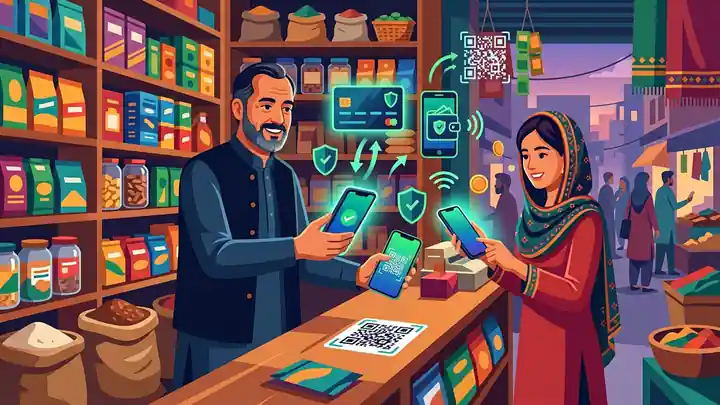
The technology is simple enough to describe without jargon. Raast is Pakistans instant payment system operated by the State Bank, moving money between bank accounts and digital wallets in real time with no fee charged to the user, and its QR layer lets any merchant accept a payment with a simple scan rather than a card terminal. Unlike card networks, which route through international processors and charge interchange, Raast is domestic infrastructure, which is exactly why the state can push adoption aggressively without raising anyones costs, and unlike older transfer systems, it settles instantly rather than batching overnight, which is exactly what makes it a genuine replacement for government disbursements that used to wait several days for cheque clearing. The governments next infrastructure target is the offline gap: a mechanism for digital transactions in areas without internet connectivity is under development, alongside broader connectivity investment, because a cashless economy that only works in connected cities is not a national economy, and the officials briefing the prime minister said exactly that in those terms.
A Small Business Checklist for the November 16 Switch
Vendors, contractors and suppliers who bill the government should compress the transition into a one-evening checklist. First, confirm the receiving account: make sure the bank account or wallet you invoice against can accept Raast transfers, and update the account details printed on your invoices so the DDO paying you has nothing to chase. Second, clear the cheque pipeline: any instruments issued against assignment accounts before 15 November follow their own clearing rules, so reconcile outstanding cheques with your departmental contact now rather than discovering a stranded payment in December. Third, learn the receipt trail: Raast confirmations arrive instantly and carry references that replace clearing stamps, so adjust your accounts-receivable documentation to match the new proof-of-payment format. Fourth, test the QR side if you sell to the public, because the same rails that serve government now serve your counter, and QR acceptance at 2 million merchants is becoming the baseline consumers expect. Fifth, budget the fraud conversation with staff, because instant payments compress the window for catching mistakes, and a one-page internal rule, verify account changes by phone before updating them, prevents the scam pattern this transition will inevitably attract. None of these steps costs more than an hour, and taken together they turn a government mandate into a complete non-event for the business that prepared properly.
What Comes After November 16
The deadline is a milestone inside a longer campaign, and the next steps are visible in the meeting record. The department-wise roadmap with specific timelines and targets is now a deliverable, the 25 priority entities carry a December completion expectation, and the complaints pipeline for digital-payment problems has been ordered to resolve issues without delay, the feedback loop that determines whether a mandate feels like service or friction. Businesses should expect Raast QR acceptance to become a de facto requirement for consumer-facing trade as the merchant base doubles again, and households should expect the utility-bill QR habit to be marketed aggressively this winter, with the funding picture for business borrowers covered in our PM Youth Loan Scheme expansion and the market backdrop in the PSX and policy-rate coverage. The connection to the wider affordability agenda is direct, and readers tracking the cost side of household finance through our petrol price in Pakistan today or the LPG cylinder price should add the payment side to the same monthly audit, because every fee avoided and every queue skipped is the same rupee saved twice.
The Risks That Could Slow the Rollout
Honest execution requires naming the failure modes. Connectivity remains the first, because instant rails fail in dead zones and the offline mechanism is still under development, which is why the government paired the mandate with infrastructure work. Digital literacy is the second, since an elderly pensioner or a first-time vendor handed an app needs support the DDO training does not cover, and the consumer-problems directive exists precisely because early adopters are already filing complaints. Fraud is the third, because instant irreversible payments attract social-engineering scams that a cheque cycle slowed down, a risk pattern our reporting on the consumer enforcement actions mirrors across sectors, and the public awareness campaign ordered alongside the rollout will need a strong scam-education component to protect the newest users. Downtime is the fourth, since any outage on a mandatory payment rail stalls government disbursements outright, which quietly makes the State Banks operational record the single most important variable in the entire programme. None of these risks reverses the direction of travel the transaction data confirms, and the transaction statistics suggest the population is already well ahead of the mandate, but the government that manages them fastest will be the one whose cashless promise survives contact with December.
Frequently Asked Questions
Are all cheques banned in Pakistan from November 15?
No. Only cheque payments through government Asaan Assignment Accounts stop on 15 November; personal and business cheques continue as normal.
What happens to government payments from November 16?
All payments under the affected Asaan Assignment Accounts run exclusively through the State Banks Raast instant payment system, with trained Drawing and Disbursing Officers operating the new mechanism.
Does Raast charge a fee?
No. Raast transfers between accounts and wallets are free for users, which is central to the governments adoption push.
What is the Raast QR code system?
A merchant payment layer that lets shops accept instant payments by scanning a QR code, with active merchants growing from about half a million to more than 2 million during the push.
How big is Pakistans digital payment shift?
Annual digital transactions rose from 6.9 billion to 11.3 billion in a year, digital banking users exceed 135 million, and financial inclusion has reached 69 percent.
Will Raast work in areas without internet?
A mechanism for digital transactions in offline areas is under development alongside connectivity investment, and the government has ordered that user problems be resolved without delay during the transition.
The transition details follow the prime minister office briefing on the cashless transition, and this page will be updated as the December digitisation targets and any new payment rules are announced.